Foxhole Faith: Why Emergencies Make Believers of Almost Everyone
PrayerGroup.Live · · 6 min read
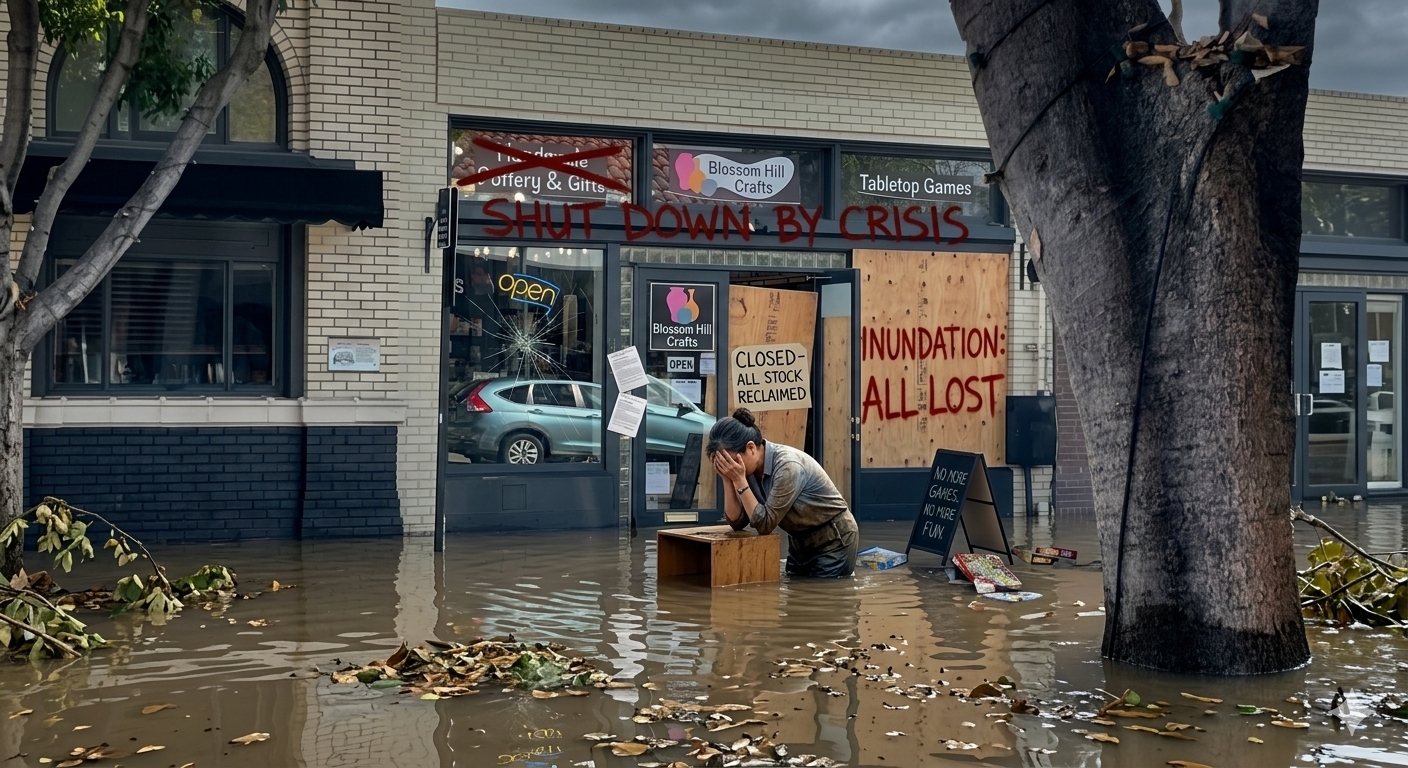
There is a particular posture that hospital waiting rooms produce in people who would tell you, if you asked them on any other Tuesday, that they do not believe in much of anything beyond the visible world: elbows on knees, hands loosely knit, eyes on the middle distance, lips moving very slightly. Nobody teaches this posture. It arrives on its own, summoned by the machinery of dread, and it looks, to anyone walking past, exactly like prayer, because it is.
An Old Line, Litigated Ever Since
The phrase for this is old enough that its origin has gone slightly fuzzy at the edges, the way old phrases do. “There are no atheists in foxholes” is usually pinned to the trenches of the First World War, though the sentiment shows up even earlier than the specific image, in a 1914 dispatch quoting a bishop who noted that men who had never prayed before were praying now, a history the phrase's own record keepers have traced in some detail. The line became durable because it kept being true in ways that were easy to observe and hard to argue with, and it has been re-litigated ever since, mostly by people who dislike its implication. The Military Association of Atheists and Freethinkers has pushed back on the aphorism for years, and the Freedom from Religion Foundation hands out an annual award to a service member who serves honorably while remaining openly secular, a small institutional rebuttal to the aphorism's smugness. It is a fair point. There are, in fact, atheists in foxholes. The more interesting question is what percentage of them stay that way once the shelling starts.
What the Numbers Actually Show
Here the data is more precise than the folk wisdom, and stranger. A study of archived World War Two survey material, led by the Cornell researcher Brian Wansink along with his brother Craig, a religious studies professor, found that as combat intensity rose, the share of soldiers who reported praying rose with it, climbing from 42% among those in milder combat to 72% among those facing the worst of it, according to the study itself and Cornell's own reporting on it. That is not a rounding error. Nearly three quarters of the men in the most intense combat conditions reported praying, as if fear had a dial and prayer were wired directly to it.
The Part That Complicates the Story
What happened fifty years later is where the tidy narrative breaks down. The same veterans, interviewed decades on, showed a split: those who described their combat experience as negative were attending church at notably higher rates than peers who had seen no combat, while those who described it as positive were attending less. The foxhole, in other words, did not make believers of everyone in the same way. The more striking pattern was among those who came away wounded by the experience.
A parallel study conducted in Sweden, one of the most secular countries on earth, tested the aphorism against a genuinely irreligious population and found that among parents of seriously ill children, a majority still described themselves as atheist or agnostic, and yet roughly half of that same group prayed anyway. Belief and behavior had quietly come apart. People were doing the thing without holding the conviction that was supposed to produce it, a disconnect the USC Center for Religion and Civic Culture has also traced outside the battlefield, in prisons, among people who found faith in crisis and then, sometimes, lost it again just as fast.
A Reflex, Not an Argument
This is, on reflection, the least surprising finding imaginable, and also the hardest one to sit with, because it suggests that prayer under duress is not really an argument about God at all. It may be closer to a reflex, something like the way a hand shoots out to break a fall before the brain has finished registering that a fall is happening. There is support for this in less dramatic settings than war and pediatric wards.
When the coronavirus pandemic reached the United States in March of 2020, more than half of Americans told Pew researchers they had prayed specifically to end it, and global Google searches for prayer spiked to the highest level ever recorded for that metric, rising across nearly every country and income bracket, with one notable exception: the least religious nations on earth barely moved at all.
The pattern is revealing precisely because it is not universal. If crisis simply turned everyone toward God, the least religious societies should have experienced the same surge. They largely did not. Prayer rose where some reservoir of religious language or practice already existed.
Which raises an uncomfortable possibility. Perhaps the capacity for foxhole faith is not universal so much as it is latent, a kind of pilot light that had to have been installed at some point, however many years ago, however long since it was last lit.
What This Does, and Doesn't, Settle
None of this settles the old argument so much as it relocates it.
If fear reliably produces prayer primarily in people who have some residue of belief or religious practice to draw on, then the aphorism is less a statement about human nature in general and more a statement about how thin the line is between “lapsed” and “available.” If the prayer itself sometimes outlasts the crisis that produced it, becoming, decades on, an actual church pew on an actual Sunday, then the foxhole was not a hoax or a moment of weakness so much as a signal about something the crisis had brought to the surface.
And if, as the Swedish study suggests, a great many confirmed nonbelievers pray anyway when their child is sick, then perhaps the whole framework of belief versus unbelief was always too clean a container for what people actually do with their hands and their attention when they are afraid.
Perhaps the more interesting question is not whether there are atheists in foxholes. There plainly are.
It is what it means when one of them prays.
An Open Question
What remains unresolved, and probably should, is whether any of this counts as faith in the sense that theologians or committed skeptics would recognize, or whether it is something else entirely: a private, low-cost insurance policy taken out against outcomes nobody can control, canceled the moment the danger passes.
The waiting room emptied. The soldier came home. The pandemic, eventually, did too. Some of them kept praying. Most, according to the numbers, did not.
Maybe that tells us something about faith. Maybe it tells us something about fear. Or maybe prayer occupies a stranger territory between the two, where belief is not always a prerequisite for reaching toward something beyond ourselves.
It is worth wondering, the next time your own hands find that posture without asking permission, what exactly they are telling you.
We all need a boost now and then. AI assisted us with this piece.